I’ve met my out-of-pocket costs—for seeing Tim—and other people as well. So I suppose I have to stop my lame threatening to cancel appointments with Tim because the benefits would not matter financially in checking account dollars. Trade-off of video vs office remains. Less self-care needed before video. Office requires much more effort. Be presentable (which gets a line item in the after visit summary). Use gas. Travel time plus visit marked off on calendar (during work hours is significant). The unique reward: the handshake.
During appointment preregistration in MyChart on Questions Related to the Virtual Visit there is a text field—Does Tim see the answer?—What is the reason for your visit? Am I hurting myself when I enter bizarre and obscure answers? e.g., Financial and Emotional Holes. Where does the data end up? Seems like the AVS should bring that information forward.
If a ticket breaches at work, you must pick a reason. I always put “delay in updating ticket,” but then a description is required. Since I don’t want to write, “I was an idiot and forgot to finish the work,” I learned that simply putting a single period gets me past the screen and lets me resolve the ticket. Done.
Sometimes the phrase says it all. Maybe getting granular would be useful data somehow. But mostly, that phrase is the whole story. How about, “filling in the description from the last ticket resolution made me late resolving this one…” ITSM doesn’t accommodate snotty attitudes, however.
The Wisconsin DNR is at the State Fair to promote outdoor recreation, state parks, wildlife, fishing, and other natural resources to fairgoers. The fair is a big public event, so it’s a convenient place for the agency to do outreach, answer questions, and get people interested in Wisconsin’s outdoors. Every year the DNR presence is in Exploratory Park.
I blocked time off during my regular week as unpaid time off to balance my paid weekend booth hours. I learned the seating is banquet chairs. I ordered a portable lumbar support seat. The effectiveness was less than optimal. Wore my Keen hiking boots for standing and walking.
Chris is gluten free; on the drive he was lamenting missing a good fair corn dog. I asked him if I needed to sneak off and hide if I get one? He was able to trek over to the gluten-free section of the food court. The historically awesome Wisconsin Cream Puffs are close to the Park. I turned away from standing in the mile-long line. I really wanted one, or two.
Beforehand I worried about spending time with my supervisor. Turns out the shift was super easy. By the end many of my ideas proved good and shared quips were relished.
My max dose of Advil got me through to half way. Suffered a little. To finish, I experimented with pain-med dosage. Turns out muscle relaxer plus anxiety med makes me talkative and loopy on the drive to the park-and-ride to get Escape.
Worst part: booth-improvement notes got left on the laptop. Lumbar support; product fail.
Everyone says I pay way too much for rent and parking for the trade off of living downtown. I picked this building, in 2013, because it was 2 blocks from the Tai Chi Center of Madison—before covid was on S Bedford St. We would do push hands in the parking lot or the park. Bedford Crossing was 8 blocks from GEF2, for DNR work. I rode my bike. Everyone says, move, find cheaper situation. And, everyone is Janet. Everyone is also the looks, rolling of eyes, statements of living downtown is expensive that I hear as “move to cheaper” is the wise “move.” Moving is it’s own hell. Research, pack, transport. Anxiety chest clutch claims me. DNR moves to Hill Farms this Fall, a non issue. I’ve been 100% telework.
Max
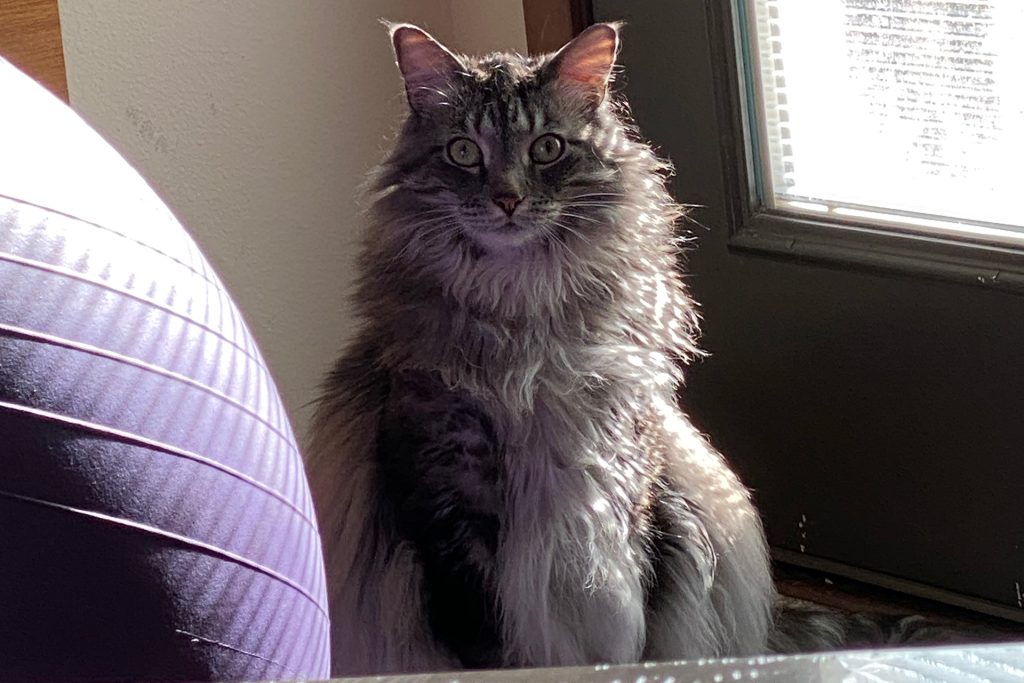
No I’m not getting rid of the cat. Apparently, everyone says I should not have gotten a long hair cat. And everyone is Philip and Janet. The long hair everywhere is ruining my life. The house cleaning, the tiny hair balls the laundry can’t win the fight of. The way he wants to walk in front of me looking back at me every three steps. I taught all the Rotties, that “you’re gotta move” definitely meant don’t do lingering steps directly in front of me. Max at six years gets a cat appropriate sideways foot kick in the butt “Go!” when I can’t stand it anymore on different particular days. Oh, and he can’t have regular meal times, 5pm and 7am wrong is his way of life expectations. My vet said I was feeding him too much, so the less food = life is worse, more complaint
In December, I raised two errors in my medical records. The After Visit Summary said I was a year younger than I was. And my diagnosis was listed as bipolar 1 instead of bipolar 2.
Different flavors of the same underlying issue: being documented incorrectly. But not equally serious.
The Diagnosis Piece
Bipolar 1 and bipolar 2 are not typo-adjacent. They are clinically distinct conditions.
My layperson understanding of Bipolar 1 includes things like: thinking you’re God, hallucinating, ending up on a rooftop thinking you can fly. The Richard Gere movie Mr. Jones captures the picture pretty well. Bipolar 1 involves full manic episodes, sometimes with psychosis, sometimes requiring hospitalization.
I have never had any of those experiences. As a person (not a medical professional), I know I am not Bipolar 1.
Bipolar 2 lives in hypomania and depression. When I am hypomanic, I recognize the pattern. High energy underneath everything. Talking fast. High creativity. Sleeping very little. Overspending. Promiscuity. Changes in appetite. Less severe than full mania. Hypo, as in less than. I don’t lose contact with reality. But it’s still bipolar. And the depressive episodes carry their own weight.
The treatment approaches for the two overlap but are not identical. Some antidepressants that a bipolar 2 patient tolerates could trigger mania in a bipolar 1 patient. Providers need to know which one they are managing.
I am bipolar 2. That has always been my diagnosis.
How the Error Got There
At some point in my history of medical records, someone changed the diagnosis from bipolar 2 to bipolar 1. A typo, a misclick, a moment of distraction. I don’t know who or when. I could probably trace it back through old summaries, but that part doesn’t matter.
What matters is that the change wasn’t my current provider. He inherited the error from whichever chart he received. His template then pulled the wrong diagnosis forward, session after session, without anyone noticing. That’s the thing about template systems: they don’t verify. They repeat.
Tim didn’t introduce the error. Tim is the one who corrected it once I raised the flag.
What It Feels Like to Be Documented Incorrectly
For months, when I looked at my AVS after each session, I saw a version of me that wasn’t me. Wrong age. Wrong diagnosis. A quiet, ongoing misrepresentation.
Not the kind of thing you can complain loudly about. It’s paperwork. It’s a template pull. It’s not personal.
Except it is personal. Because the record is the thing that follows me forward. The record is what other clinicians see when they look up my chart. The record is the version of me that persists past the hour we spent together in the office.
Being documented incorrectly, session after session, is a form of quiet erasure. Not intentional. But real.
The Correction and What It Meant
The diagnosis eventually got fixed. That mattered.
Tim took an extra step to ask me to send a screenshot, in order to know exactly what I was seeing. It mattered not because Tim clicked a button. Everyone with template-editing access can click a button. It mattered because Tim paid attention to the raised flag, went in, remembered to look, made the change.
The correction was a small act of being heard.
What Attention Looks Like
I think this is part of why the birthday email I sent was so pointed about the AVS template
It isn’t really about the age. It’s about whether the person documenting me is paying enough attention to keep the record aligned with the actual person.
Corrections require noticing. Noticing requires attention. Attention is what tells me I’m being tended to, not just processed.
Six months to update a diagnosis is a lot of processing. A little bit of tending would have gotten it done faster.
I have developed a habit of carrying around two or three gratitude objects in my left jeans front pocket. They would get transferred absent-mindedly from pocket to pocket when changing jeans or shorts. Recently, there was a pocket check failure before laundry chores. Now. There is a loose gratitudes that had traveled from pocket to washer to loose in the dryer.
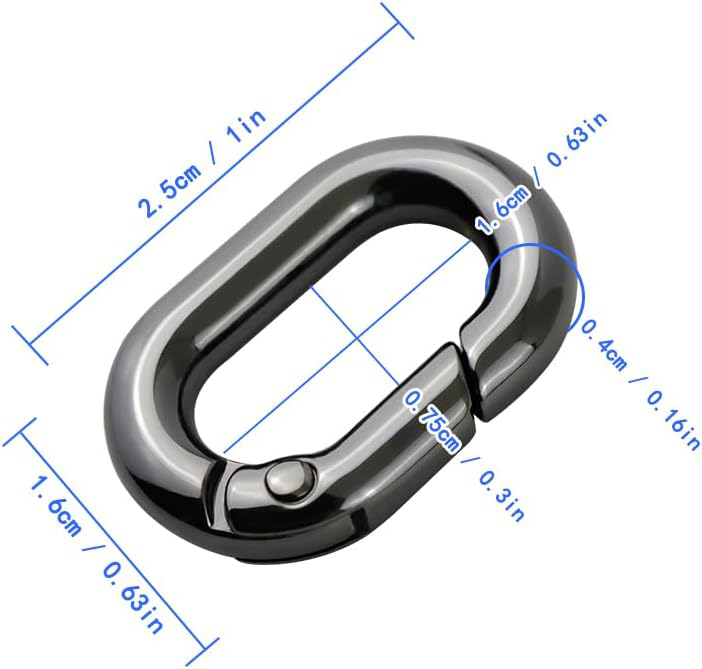
The object is a miniature black metal carabiner. Cyclic machine murmur is the constant. The ting, the louder drop, the multiple variations of the scratch, the sliding between the blades. What an interesting way to sit in silliness. Not sure why this type of unpredictable and random noise is soothing and not irritating. Perhaps a music theorist can explain the intricacies of calculating irritating vs calming sound.
Research Says
The carabiner in the dryer is comforting because it’s unpredictable but bounded. You know it’s going to make noise—the only question is when and what kind. The brain finds that kind of controlled randomness satisfying rather than threatening.”
Slam poetry, bardcore, and hard rock share a quality of pushing toward you — they demand a response, they impose a rhythm your body either accepts or resists. The carabiner asks nothing. It just occasionally announces itself and then goes quiet again. There’s also the context. The dryer is domestic, familiar, safe. The sound is embedded in an activity you understand completely. Nothing about it requires decoding. Your nervous system can relax around it.
Music theorists would point to something called stochastic resonance — the idea that a small amount of random noise can actually enhance perception and create a kind of pleasant background engagement for the brain. The carabiner is doing that accidentally.
Also: the dryer has a rhythm underneath the randomness — the tumbling cycle, the consistent hum. The carabiner improvises over a steady beat. That’s actually the opposite of bardcore, which removes the steady beat entirely.
Conversation was happening. An argument that wasn’t arguing. A convincing. I didn’t believe him. Suddenly there was a rush of movement. He popped out of his chair and exclaimed…
[12:19] Tim: I feel like I would benefit from writing this out on paper.
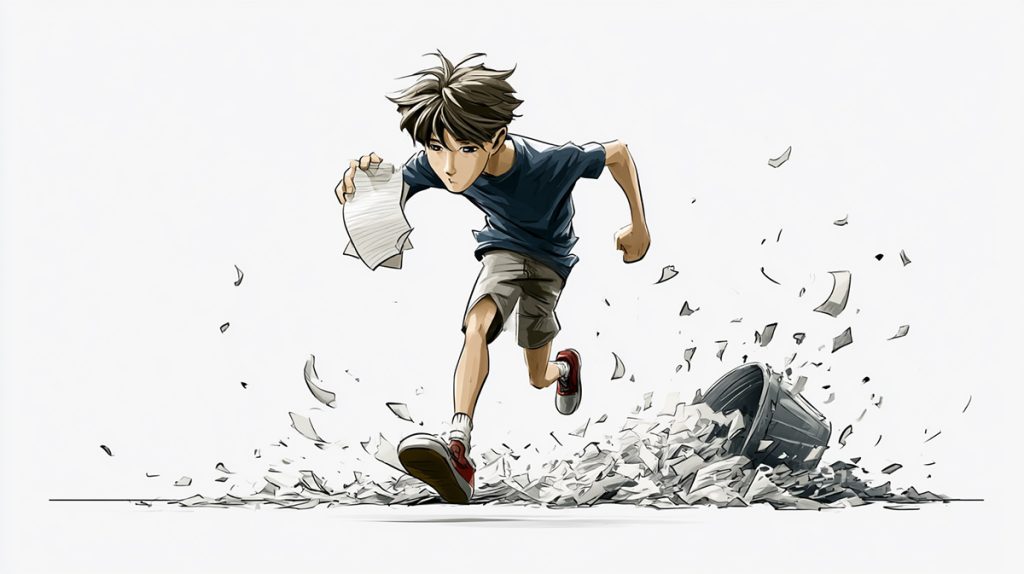
Tim has never moved that fast. (A close second is the day he showed me his 3D printer on video from his home office. Animated and bringing samples to the screen.) Today, the paper grab was faster. A sure fire way to pull someone out of a stuck state of mind is to watch someone rush across the tiniest office, pushing the office chair aside. Grab from… a drawer or top of desk? A very thin, nearly depleted, small notepad. A dash back to his chair. No pause in the lecture. And now a visual aid in the making.
Was I even listening now? That was so incredibly fascinating. Before I knew it, the process reversed itself. The page ended up in the bin close to where it was retrieved.
What? All this activity, and I don’t get to see it? Lecture continued. Discussion.
Seriously! It happened again!
[20:21] Tim: Let me go back to my piece of paper. [digs note out of bin] [20:23] Me: Don’t throw it away.
The note aided more discussion. And then the paper ends up back in the bin. I never got to see the page. Did I see ovals? Apparently chart or mind map or words wasn’t for my benefit. Later I wished I could have seen. I realized that I wanted to see his handwriting.
Is it sad, I was highly amused? Maybe nothing to do with paper and unexpected rushing.
When I was a kid, classmates talked about a Golden Birthday. When the date, within the month, of birth equals age. Not much fun when the day is the 1st. Nothing for a baby to remember. Philip didn’t care when he turned 16. I guess the window for the thing being cool was by middle school.
I re-envisioned my special birthday calculation. When age matches the last two digits of birth year. Today: my birthday this year is age 63 from 1963. Known as the Beddian Birthday. But nobody cares. I’m the weird kid with an attraction for patterns in numbers.
The four digit combo for the Goat Yard… the numbers can be 3 numbers in sequence. 6-7-8. Where is the fourth number? When a 6 is rotated directly on top of another 6, it turns into an 8. Hence, one way to remember 6-7-6-6; it is really a sequence. Nothing to do with sex positions. Just a number pattern and graphic design, sans serif font.
Pattern recognition must be hereditary. My dad first tried to get me to remember a phone number by adding different digits within the number. I got a little confused but years later it made a lot of sense suddenly and I’ve been doing it ever since. The only problem is, I can’t do math in my head so if there were any numbers to add, to find a pattern, they had to be super simple number combinations. Ages and years are handy memory keepers.
Yet, I don’t think I can get very far memorizing digits of pi.
My dad was good with math. My brother was a math genius. Bill’s PhD was in topology, basically the math of patterns in shapes.
Templates are only as good as the accuracy of the data. A worthwhile template needs the right balance of information that is repeatable to save time and provide adequate space to enter fresh content.
Last December I noticed that I was being documented week after week in the After Visit Summary (AVS) incorrectly “…a 61 year old female who is here for…” I pointed out the flaw. I learned about the efficiency of the medical template.
Computers are advanced. Seems really silly that the template isn’t automated. Just saying. My diagnosis is now correct. A fix achieved:
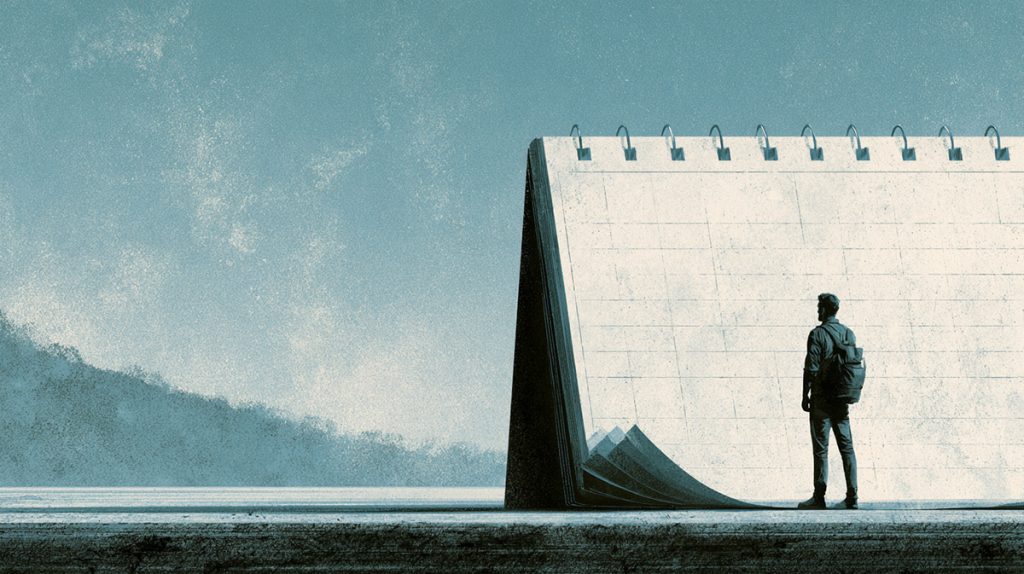
Today is August 1, 2026. My birthday. Will the passage of time be six months again before I get my 63? Not that I really want to get older. I just like accurate date data. I want my people to give me special attention. Get it right. Does it really matter? Ok. Not really.
I lie. I don’t know why it matters. However, today is the birthday. Something did change. Whether I’m happy about aging isn’t the thing. I want the full treatment… well if it changes in a timely manner I can give back, “Validation provided for effort.” But in this change, effort doesn’t scale. The change is made or not. There is no partial way to get the task done. Maybe pull up the template and just look one day? Or key in the text and forget to hit save?
Oh well, I can’t think of any example where changing 1 character can have a partial effort.
Fix the template. Don’t take six months. Complete effort desired. First paragraph. Change 2 to 3. Simple.
Back in April, I wrote about confidence naming—the therapy thread where Tim described the idea of an activating phrase. He asked me to name my “confident stance.”
The idea: if you can name the version of yourself who owns the room, you can step into that version when it matters. I wrote about several phrases I already use:
“head up chest out” from Kevin at the gym,
“working onit” from unfocused pool laps,
“push against the current” from the resistance pool,
“driving fast and taking chances” reclaimed for joy,
“I’m going” from yellow traffic lights that demand calling Dibs.
The actual ask Tim made was for a universal phrase. Not several context-specific ones. A single verbal switch that could unlock the whole confident persona no matter the situation. I ended my April post by saying:
“Which one, if any, is the universal? Still looking and deciding.”
The discussion went dormant. Tim and I never brought confidence naming back up in session—the daily system he and I use for homework only allowed him to receive the abridged version of the post, not the full backstories.
This week I think I found something important. It isn’t a phrase. It’s a song. Numerous lines that can be used as personalized phrases that help to invoke confidence. This week on Patreon, Jared Halley shared a sneak preview from his upcoming album of original songs. On a constant loop, I’ve been listening to “Still I Stand.”
[Chorus]
Still I stand On this broken ground Through the silence I found my sound No chains can hold No walls confine Still I stand This fight is mine
Every song carries two backstories at once: the songwriter’s and the listener’s. Both live in the lyrics simultaneously. When a song like Still I Stand offers the perfect line, or lines, I find a new confidence naming. “This Fight is Mine” is just one, the best.
The verses bring you up to speed on the heavy nights, dragging days, weight carried nowhere. The song paints depression without saying the word. Then a flicker: faint and small. Not blinding, not certain. Just a spark. The pre-chorus makes the deal explicit: echoes that fade, scars that stay, strength born from pain. There’s no “and then you’re healed” in this song. The scars stay. That’s part of why the song means so much to me.
One thing songs do that life doesn’t: they compress time. In the lyric, two lines are one line apart
Nowhere to go But I saw a flicker
In life, the distance between those two states can be as much as months, or even years. The song delivers the arc in seconds; the actual passage from one to the other takes fortitude.
When I listen to Still I Stand, I am not the singer. The person in the song has already lived through all or part of something and is ready to claim the fight, is right there, still standing.
I’ve accomplished plenty. Yet my broken ground still shifts under my feet most days. I don’t know yet what sound might be mine. I can’t claim the no-chains part and have it be true right now. Only true someday, maybe.
What I can do is borrow. I can play the song, and for the length of it, I can inhabit the stance the singer has reached. The confidence is ready in the music. But loaned, not owned. When the song ends, I go back to my regular self. (Or, I happily play it again.)
Maybe the universal confidence naming doesn’t have to be just a phrase. A song can provide what is needed—press play, and the confidence is already there. I don’t have to force the feeling. The song brings it out.
I have all my phrases. Head up chest out still works when I’m walking somewhere. Working on it still works when the pool of tasks is unfocused. But when I need the entire confident persona, I now have a place to go. The whole point of a confidence naming is that it’s a tool to use repeatedly. Not one and done.
“This fight is mine” carries a lot for a four-word phrase.
There’s a whole genre of movie moments where a character claims a fight and demands everyone else step back. LOTR: Aragorn stepping forward at the Black Gate; Frodo insisting on carrying the ring alone. Harry Potter vs. Voldemort: “Neither can live while the other survives.” Every boxing movie ever made—”let me handle this.” Every Western showdown. Braveheart, Gladiator.
The pattern isn’t just about ownership. It’s about earning the right—or wanting the privilege of the hard thing. The hero doesn’t want to share it. Sidekicks want to help; the hero waves them off. Not because help isn’t wanted—because this one is mine to face.
The hero, in that moment, is always the one—even when others are present. Being “alone” here isn’t about the number of people nearby; it’s about who has to face the thing. Sometimes chosen alone, sometimes forced. In the movies, that isolation is earned—the hero has demanded it. In life it can feel more like this is what I got left, so I claim it as mine. Same words, different origin story. Chosen alone and arrived at alone aren’t the same, but the song fits both.
And not every fight fits this pattern. Some fights are the kind you claim with pride and stance and voice. Other fights—my future, my aging body, my relationship to time—those aren’t about fighting at all. Those are about accepting. And “this fight is mine” is the wrong language for those times. When the opponent is your own resistance to a reality that already is, the movie-hero framing doesn’t help. The work of acceptance is dissolving the resistance, not doubling down on it. Some fights only I can fight; some things I have to stop fighting.
There’s another reading of the chorus I can’t unhear. The silence is the trigger—it means no one is here. And the freedom lines—no chains holding, no walls confining—read differently against that silence. This isn’t only liberation. When you’re alone—both bad and good—you’re in charge. No one holding you. No one sheltering you. The freedom and the isolation are the same fact. Finding my sound becomes about making progress through the chains and walls, not around them. And then still standing—this fight mine, as in nobody else’s, nobody helping.
I keep having to do so much alone. Depression is one of those walls. So are the voices—sometimes actual people, sometimes only my own head. Same internal walls either way. They need no help from external ones.
There’s a difference between “I hate this” and “this fight is mine.” Both are honest responses to hardship. One is protest—legitimate. One is claiming—also legitimate. One doesn’t replace the other, and pretending you can always be in the second one would be dishonest. You can’t give the same fight all the time. It’s easy to stand on the hill or enjoy the broken ground when mood or life lets you be full of courage. On the days those resources aren’t there, “I hate this” is the true answer.
On the in-between days there’s something smaller. Not fighting the fight well. Not winning. Just refusing to hand it off. Standing up when I’d rather stay down. Playing the song.
The song sings the fully-claimed version. My job on any given day is whatever version I can muster. And the standing isn’t a one-time thing.
Still I stand.
This fight is mine.
Both have been added to the collection of confidence naming.
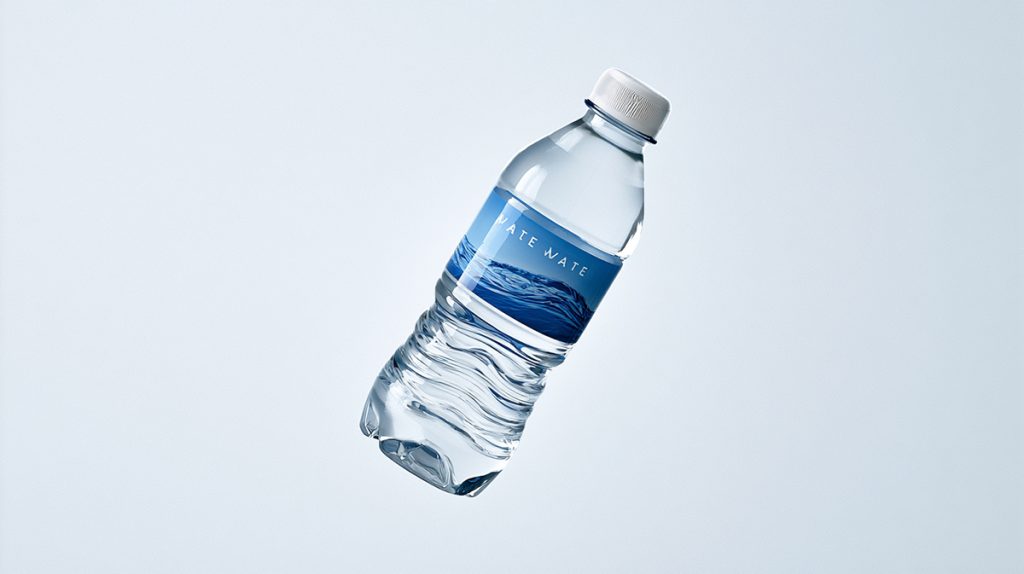
I had brought a 12 oz. bottle of water. Klarbrunn.
It seems like lately, all sorts of different lids do not twist off easily anymore, and I was once the kind of person that people went to to get lids taken off. I was so strong. Now, I struggle. I was about to struggle to open my water.
Out of the blue, I realized, “I don’t need to sit here and be embarrassed and struggle and look like an idiot.” I just said one word: “Help,” as I handed my bottle to Tim. He accepted the bottle, and with one twist, he broke the seal for me, and handed the bottle back to me. Problem solved.
And I don’t know why. Suddenly, this little tiny gesture is like a whole microcosm of being in therapy: I hand him my bottle, he opens it, and now I can drink from it.
Everyone should drink more water.
Now that I just said that, this sounds totally even worse and ridiculous than wanting to put the moment into the gratitude record. Anyway, whatever, let’s definitely mark a gratitude that Tim opened my water bottle.
And maybe what I liked the best about it was that I only had to say one word, and the rest of it was just an unspoken exchange back and forth. Complete. Does a single word followed by exact actions qualify as “forthright communication”? Thinking back on the moment, the emotions make me want to cry. Yeah. No tears, no watered eyes, but if I thought about it just the right way, I could get some tears to drop.
Six more gratitudes happened that same hour. I recorded all of them. Only one repeat.