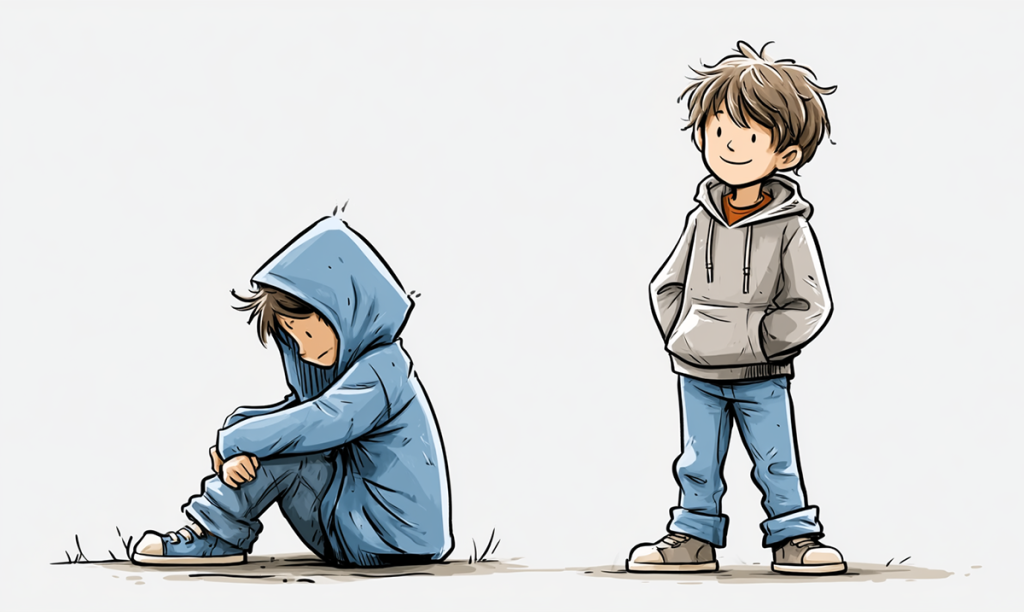
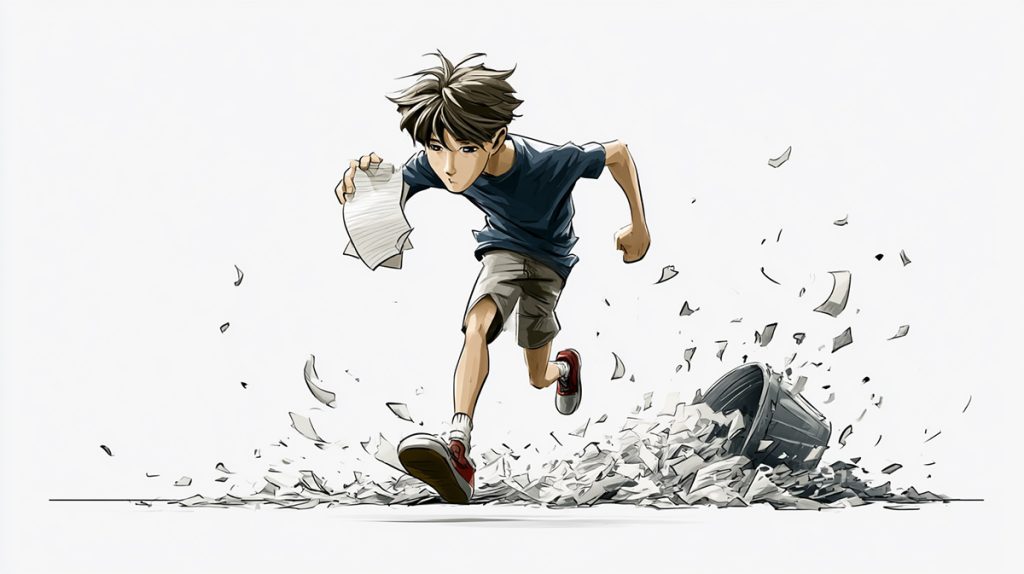
In characteristics, nine year old. Body type stocky five. Daly is infinitely small, he is a sprite. Blue sneakers, blue jeans, rolled at the cuff, blue hoodie. And a unique floppy hat. Star shaped with the points with the perfect balance of texture and flop. Blend of white and black hair spills out over his forehead. Big oval eyes and happy mouth. Hands in pockets, fast walk. The path is singular. A routine task passed down through some sort of Sprite hierarchy for job assignments. Take the finished daily, place the paper copy in a message bag, and race along the blue electric highway into the vanishing point. At the designated location the document, stays paper and is placed onto of an enormous stack. The backlog matches the height. Depending on circumstance, Daly might get to see the man’s firm hand reach from above the stack and, carefully with the middle finger, with a flick, grab the most recent paper. If by chance the pile got unsettled, Daly takes the moment to straighten the stack once again. Since the task has been completed, he closes his satchel with the one-buckle and returns to base to await the next call to duty.
Daly is a Kristen Britain Green Rider, he is pony express, but his route feels more like TRON—a highway of light entered from the ordinary world. Everything is confidential and intimate. It’s also irrelevant, unacknowledged, and lost to the ether.
Daly paces back at base; he’d suck his thumb if he was three.
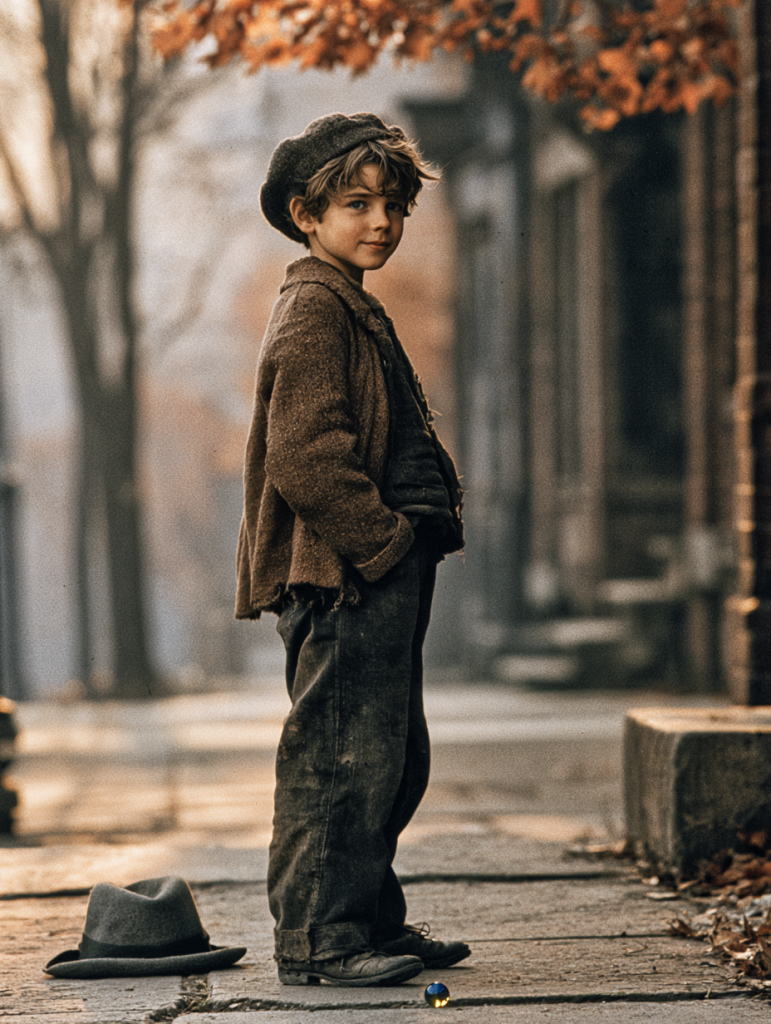
The boy ran, jumped, and successfully crossed the gap, and landed on a nearby roof. His bare feet continued to patter until he came to a stop. His forehead was damp and his palms were sticky. Standing tall, he glanced behind at the gap. Brady smiled, and brushed his bangs out of his eyes. He told the other kids that he was an orphan. He spent the day solo, running and target shooting with his slingshot. He pulled the slingshot out from the back pocket: handmade from a perfect Y of a dogwood branch. A small knot had fallen out and served to help anchor the rubber strap on that one tip. Brady fingered the smooth grain as he approached the edge. He had several smooth stones and one marble in his front pocket.
Across the next street was the little shoppe that served sandwiches and cakes. Brady squatted down under an overhang to watch the customers. He watched a man and woman who had cleared their plates and emptied the tall glasses. The woman pulled off one glove and shyly pressed a bare finger into the remains of sweet frosting her fork was unable to gather. Brady knew that hand. He had seen it do that a hundred times, and never once in front of a stranger. The man reached for his fedora and held it in his lap. They stood, said their goodbyes while shaking hands, and walked in opposite directions. Brady tailed the man by rooftop.
Brady climbed down and began stalking the man along the sidewalk. He curled into a tight crouch. Brady prepared to take aim using his best marble. Then he changed his mind and nearly returned the shot to his waistband.
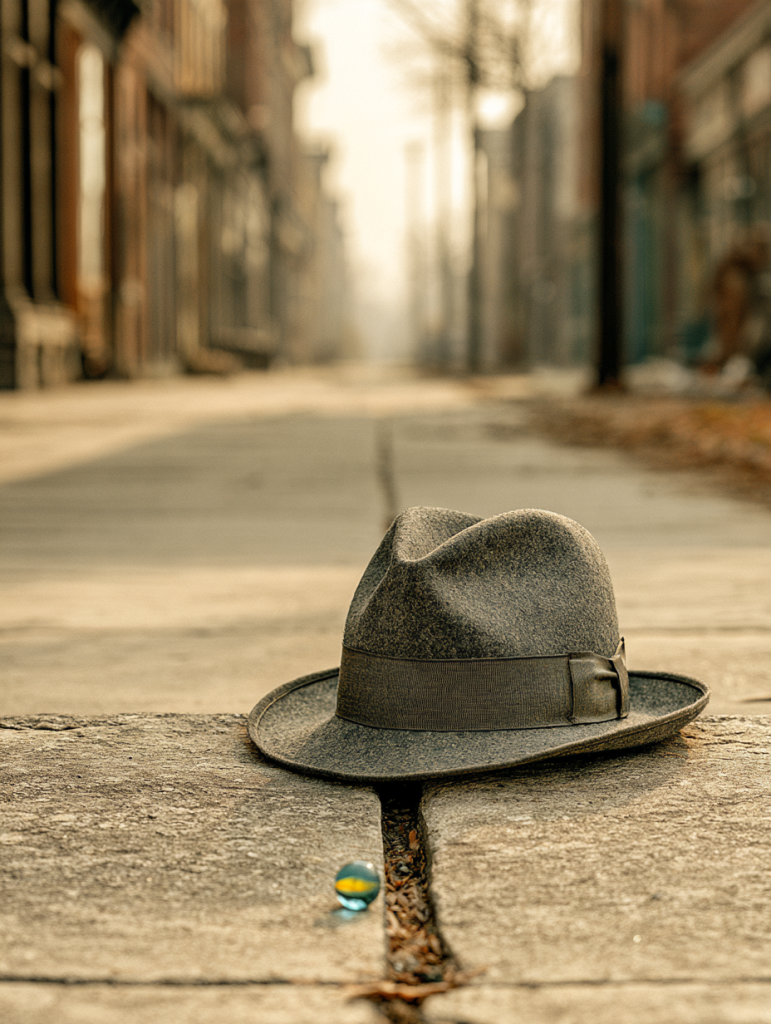
The man noticed a loose lace. He bent down to tie his shoe. Suddenly, Brady saw the smooth felt of the underside of the hat brim. He touch the soft leather to his lips, thinking. He aimed and the marble snapped the brim an inch past the man’s ear, and the fedora jumped off his head into the street.
When he moved to pick up his hat, he noticed a blue and yellow swirl marble in a crack in the sidewalk. He turned it over once, looked up the empty street, and put it in his coat pocket.
The bell tower chimes sounded across the city, and Brady realized he needed to leave quickly. He raced. At the sink he wet his hands and dragged his hair back flat. Then he sat down with his lessons.
The door slammed a little too hard behind her as she shouted, “William Bradford O’Connor, your lessons best be done already.” Then she stopped. “Oh. You combed your hair.”
“Hi, Mom,” said Brady.
Writing Battle Harvest Owl 2026 Microfiction Debrief Official Word Count: 457
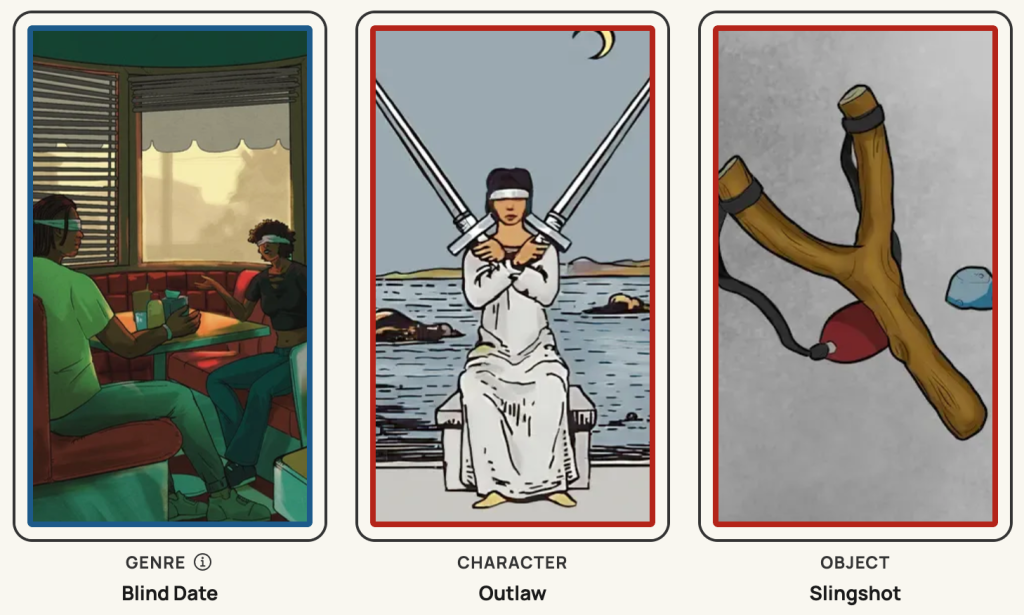
Writing Battle is “for people who want to improve their writing through friendly competition, set deadlines, and writing prompts.” I submitted my first story, 500 words, $23.64 entrance fee, 2 days to write… what follows is multi weeks of dueling by peer reviews and then final judging. Potential of $800 win. My first three cards (prompts) dealt this week: Romantasy Entertainer Gem.
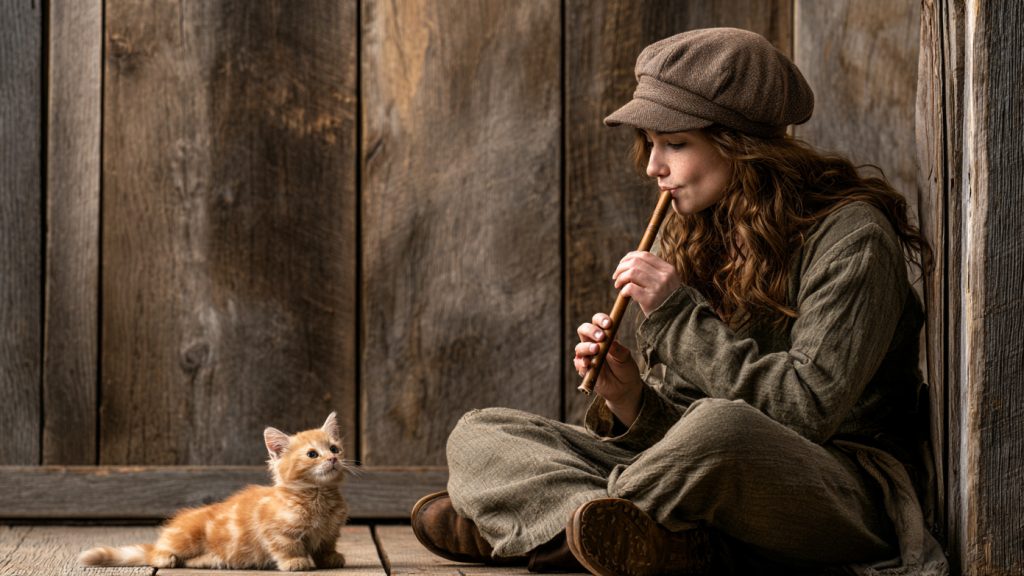
The rules: work is fully original, not recycled. I cheated. I grabbed the visual of Unavailable Music of Unavailable Men and used several lines verbatim. The surround of those lines, all new. My weakest card is romance. My pipe player in the chamber consort is wearing a clear gem mounted in the circle of space at the base of a carabiner. There is a guy. There is a griffon kitten.
Duel 1 has started. My immediate task is to read and review two stories. After one read I’ve already made my pick? The story with balloons or soap. I’ve got 2 days to submit my reviews.
Suddenly, since 1500 characters is my specialty, 500 words—what should be easy—is stumping me a bit. And, is another $29 and $33 reasonable use of discretionary funds in October? Combination of entertainment, craft practice, gamble for cash prize.
If bardcore has opened a slot from one something into something completely new in my life… maybe fingerprints and snowflakes wouldn’t be a bad choice to follow, if the opportunity arises, as a superior private in joke all my own. Throw Nickleback into the mix and it truly would be amusing.
I’ve met my out-of-pocket costs—for seeing Tim—and other people as well. So I suppose I have to stop my lame threatening to cancel appointments with Tim because the benefits would not matter financially in checking account dollars. Trade-off of video vs office remains. Less self-care needed before video. Office requires much more effort. Be presentable (which gets a line item in the after visit summary). Use gas. Travel time plus visit marked off on calendar (during work hours is significant). The unique reward: the handshake.
During appointment preregistration in MyChart on Questions Related to the Virtual Visit there is a text field—Does Tim see the answer?—What is the reason for your visit? Am I hurting myself when I enter bizarre and obscure answers? e.g., Financial and Emotional Holes. Where does the data end up? Seems like the AVS should bring that information forward.
If a ticket breaches at work, you must pick a reason. I always put “delay in updating ticket,” but then a description is required. Since I don’t want to write, “I was an idiot and forgot to finish the work,” I learned that simply putting a single period gets me past the screen and lets me resolve the ticket. Done.
Sometimes the phrase says it all. Maybe getting granular would be useful data somehow. But mostly, that phrase is the whole story. How about, “filling in the description from the last ticket resolution made me late resolving this one…” ITSM doesn’t accommodate snotty attitudes, however.
The Wisconsin DNR is at the State Fair to promote outdoor recreation, state parks, wildlife, fishing, and other natural resources to fairgoers. The fair is a big public event, so it’s a convenient place for the agency to do outreach, answer questions, and get people interested in Wisconsin’s outdoors. Every year the DNR presence is in Exploratory Park.
I blocked time off during my regular week as unpaid time off to balance my paid weekend booth hours. I learned the seating is banquet chairs. I ordered a portable lumbar support seat. The effectiveness was less than optimal. Wore my Keen hiking boots for standing and walking.
Chris is gluten free; on the drive he was lamenting missing a good fair corn dog. I asked him if I needed to sneak off and hide if I get one? He was able to trek over to the gluten-free section of the food court. The historically awesome Wisconsin Cream Puffs are close to the Park. I turned away from standing in the mile-long line. I really wanted one, or two.
Beforehand I worried about spending time with my supervisor. Turns out the shift was super easy. By the end many of my ideas proved good and shared quips were relished.
My max dose of Advil got me through to half way. Suffered a little. To finish, I experimented with pain-med dosage. Turns out muscle relaxer plus anxiety med makes me talkative and loopy on the drive to the park-and-ride to get Escape.
Worst part: booth-improvement notes got left on the laptop. Lumbar support; product fail.
Everyone says I pay way too much for rent and parking for the trade off of living downtown. I picked this building, in 2013, because it was 2 blocks from the Tai Chi Center of Madison—before covid was on S Bedford St. We would do push hands in the parking lot or the park. Bedford Crossing was 8 blocks from GEF2, for DNR work. I rode my bike. Everyone says, move, find cheaper situation. And, everyone is Janet. Everyone is also the looks, rolling of eyes, statements of living downtown is expensive that I hear as “move to cheaper” is the wise “move.” Moving is it’s own hell. Research, pack, transport. Anxiety chest clutch claims me. DNR moves to Hill Farms this Fall, a non issue. I’ve been 100% telework.
Max
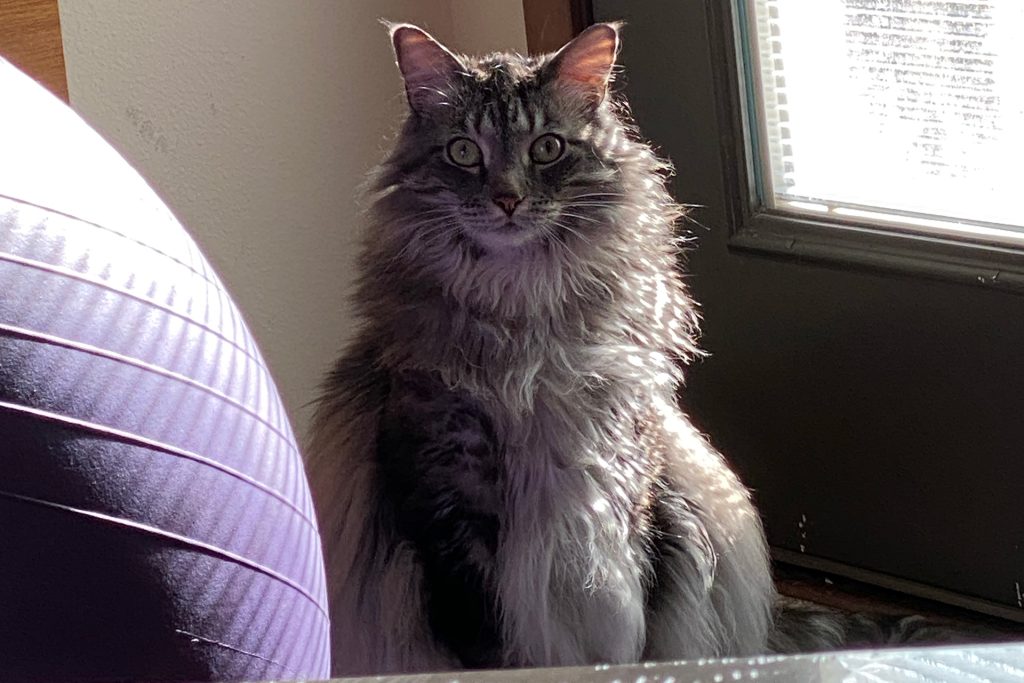
No I’m not getting rid of the cat. Apparently, everyone says I should not have gotten a long hair cat. And everyone is Philip and Janet. The long hair everywhere is ruining my life. The house cleaning, the tiny hair balls the laundry can’t win the fight of. The way he wants to walk in front of me looking back at me every three steps. I taught all the Rotties, that “you’re gotta move” definitely meant don’t do lingering steps directly in front of me. Max at six years gets a cat appropriate sideways foot kick in the butt “Go!” when I can’t stand it anymore on different particular days. Oh, and he can’t have regular meal times, 5pm and 7am wrong is his way of life expectations. My vet said I was feeding him too much, so the less food = life is worse, more complaint
In December, I raised two errors in my medical records. The After Visit Summary said I was a year younger than I was. And my diagnosis was listed as bipolar 1 instead of bipolar 2.
Different flavors of the same underlying issue: being documented incorrectly. But not equally serious.
The Diagnosis Piece
Bipolar 1 and bipolar 2 are not typo-adjacent. They are clinically distinct conditions.
My layperson understanding of Bipolar 1 includes things like: thinking you’re God, hallucinating, ending up on a rooftop thinking you can fly. The Richard Gere movie Mr. Jones captures the picture pretty well. Bipolar 1 involves full manic episodes, sometimes with psychosis, sometimes requiring hospitalization.
I have never had any of those experiences. As a person (not a medical professional), I know I am not Bipolar 1.
Bipolar 2 lives in hypomania and depression. When I am hypomanic, I recognize the pattern. High energy underneath everything. Talking fast. High creativity. Sleeping very little. Overspending. Promiscuity. Changes in appetite. Less severe than full mania. Hypo, as in less than. I don’t lose contact with reality. But it’s still bipolar. And the depressive episodes carry their own weight.
The treatment approaches for the two overlap but are not identical. Some antidepressants that a bipolar 2 patient tolerates could trigger mania in a bipolar 1 patient. Providers need to know which one they are managing.
I am bipolar 2. That has always been my diagnosis.
How the Error Got There
At some point in my history of medical records, someone changed the diagnosis from bipolar 2 to bipolar 1. A typo, a misclick, a moment of distraction. I don’t know who or when. I could probably trace it back through old summaries, but that part doesn’t matter.
What matters is that the change wasn’t my current provider. He inherited the error from whichever chart he received. His template then pulled the wrong diagnosis forward, session after session, without anyone noticing. That’s the thing about template systems: they don’t verify. They repeat.
Tim didn’t introduce the error. Tim is the one who corrected it once I raised the flag.
What It Feels Like to Be Documented Incorrectly
For months, when I looked at my AVS after each session, I saw a version of me that wasn’t me. Wrong age. Wrong diagnosis. A quiet, ongoing misrepresentation.
Not the kind of thing you can complain loudly about. It’s paperwork. It’s a template pull. It’s not personal.
Except it is personal. Because the record is the thing that follows me forward. The record is what other clinicians see when they look up my chart. The record is the version of me that persists past the hour we spent together in the office.
Being documented incorrectly, session after session, is a form of quiet erasure. Not intentional. But real.
The Correction and What It Meant
The diagnosis eventually got fixed. That mattered.
Tim took an extra step to ask me to send a screenshot, in order to know exactly what I was seeing. It mattered not because Tim clicked a button. Everyone with template-editing access can click a button. It mattered because Tim paid attention to the raised flag, went in, remembered to look, made the change.
The correction was a small act of being heard.
What Attention Looks Like
I think this is part of why the birthday email I sent was so pointed about the AVS template
It isn’t really about the age. It’s about whether the person documenting me is paying enough attention to keep the record aligned with the actual person.
Corrections require noticing. Noticing requires attention. Attention is what tells me I’m being tended to, not just processed.
Six months to update a diagnosis is a lot of processing. A little bit of tending would have gotten it done faster.
I have developed a habit of carrying around two or three gratitude objects in my left jeans front pocket. They would get transferred absent-mindedly from pocket to pocket when changing jeans or shorts. Recently, there was a pocket check failure before laundry chores. Now. There is a loose gratitudes that had traveled from pocket to washer to loose in the dryer.
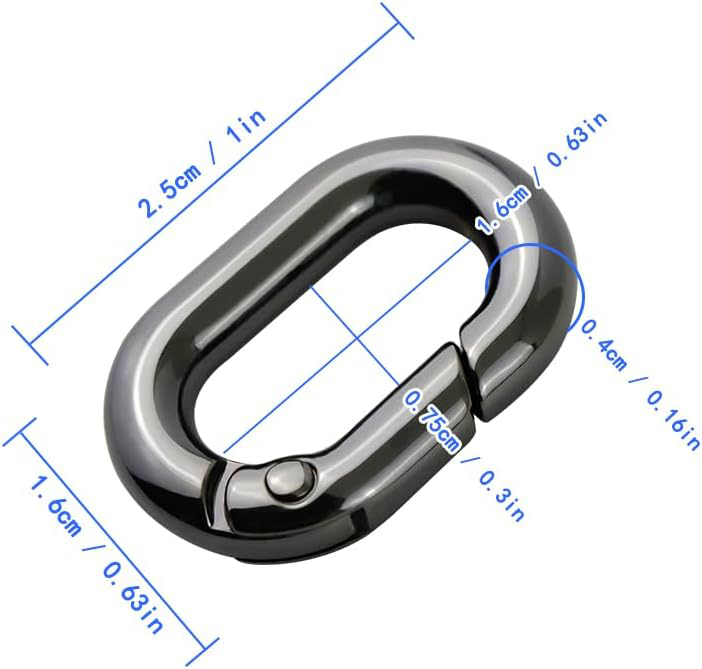
The object is a miniature black metal carabiner. Cyclic machine murmur is the constant. The ting, the louder drop, the multiple variations of the scratch, the sliding between the blades. What an interesting way to sit in silliness. Not sure why this type of unpredictable and random noise is soothing and not irritating. Perhaps a music theorist can explain the intricacies of calculating irritating vs calming sound.
Research Says
The carabiner in the dryer is comforting because it’s unpredictable but bounded. You know it’s going to make noise—the only question is when and what kind. The brain finds that kind of controlled randomness satisfying rather than threatening.”
Slam poetry, bardcore, and hard rock share a quality of pushing toward you — they demand a response, they impose a rhythm your body either accepts or resists. The carabiner asks nothing. It just occasionally announces itself and then goes quiet again. There’s also the context. The dryer is domestic, familiar, safe. The sound is embedded in an activity you understand completely. Nothing about it requires decoding. Your nervous system can relax around it.
Music theorists would point to something called stochastic resonance — the idea that a small amount of random noise can actually enhance perception and create a kind of pleasant background engagement for the brain. The carabiner is doing that accidentally.
Also: the dryer has a rhythm underneath the randomness — the tumbling cycle, the consistent hum. The carabiner improvises over a steady beat. That’s actually the opposite of bardcore, which removes the steady beat entirely.
Conversation was happening. An argument that wasn’t arguing. A convincing. I didn’t believe him. Suddenly there was a rush of movement. He popped out of his chair and exclaimed…
[12:19] Tim: I feel like I would benefit from writing this out on paper.
Tim has never moved that fast. (A close second is the day he showed me his 3D printer on video from his home office. Animated and bringing samples to the screen.) Today, the paper grab was faster. A sure fire way to pull someone out of a stuck state of mind is to watch someone rush across the tiniest office, pushing the office chair aside. Grab from… a drawer or top of desk? A very thin, nearly depleted, small notepad. A dash back to his chair. No pause in the lecture. And now a visual aid in the making.
Was I even listening now? That was so incredibly fascinating. Before I knew it, the process reversed itself. The page ended up in the bin close to where it was retrieved.
What? All this activity, and I don’t get to see it? Lecture continued. Discussion.
Seriously! It happened again!
[20:21] Tim: Let me go back to my piece of paper. [digs note out of bin] [20:23] Me: Don’t throw it away.
The note aided more discussion. And then the paper ends up back in the bin. I never got to see the page. Did I see ovals? Apparently chart or mind map or words wasn’t for my benefit. Later I wished I could have seen. I realized that I wanted to see his handwriting.
Is it sad, I was highly amused? Maybe nothing to do with paper and unexpected rushing.
When I was a kid, classmates talked about a Golden Birthday. When the date, within the month, of birth equals age. Not much fun when the day is the 1st. Nothing for a baby to remember. Philip didn’t care when he turned 16. I guess the window for the thing being cool was by middle school.
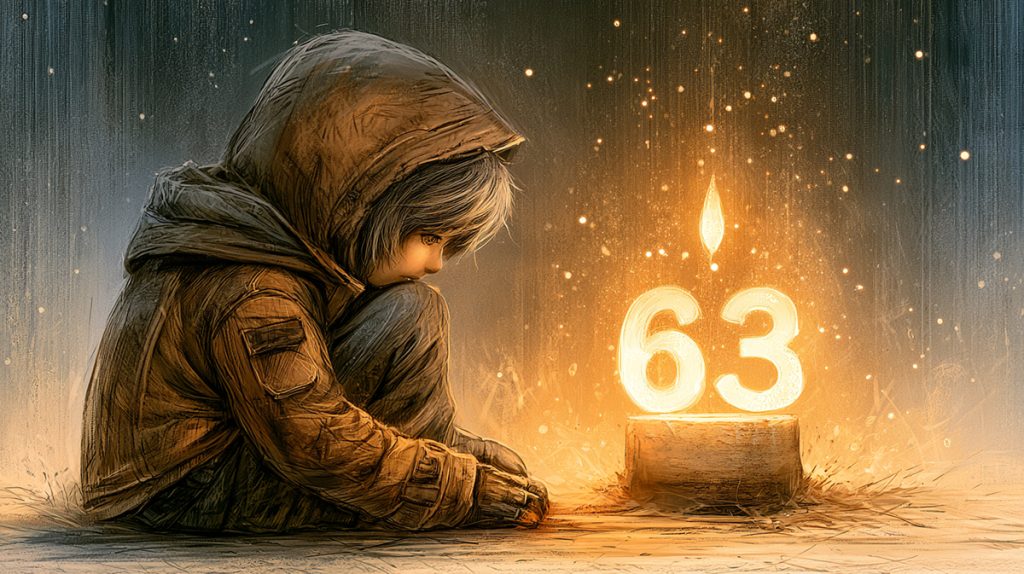
I re-envisioned my special birthday calculation. When age matches the last two digits of birth year. Today: my birthday this year is age 63 from 1963. Known as the Beddian Birthday. But nobody cares. I’m the weird kid with an attraction for patterns in numbers.
The four digit combo for the Goat Yard… the numbers can be 3 numbers in sequence. 6-7-8. Where is the fourth number? When a 6 is rotated directly on top of another 6, it turns into an 8. Hence, one way to remember 6-7-6-6; it is really a sequence. Nothing to do with sex positions. Just a number pattern and graphic design, sans serif font.
Pattern recognition must be hereditary. My dad first tried to get me to remember a phone number by adding different digits within the number. I got a little confused but years later it made a lot of sense suddenly and I’ve been doing it ever since. The only problem is, I can’t do math in my head so if there were any numbers to add, to find a pattern, they had to be super simple number combinations. Ages and years are handy memory keepers.
Yet, I don’t think I can get very far memorizing digits of pi.
My dad was good with math. My brother was a math genius. Bill’s PhD was in topology, basically the math of patterns in shapes.