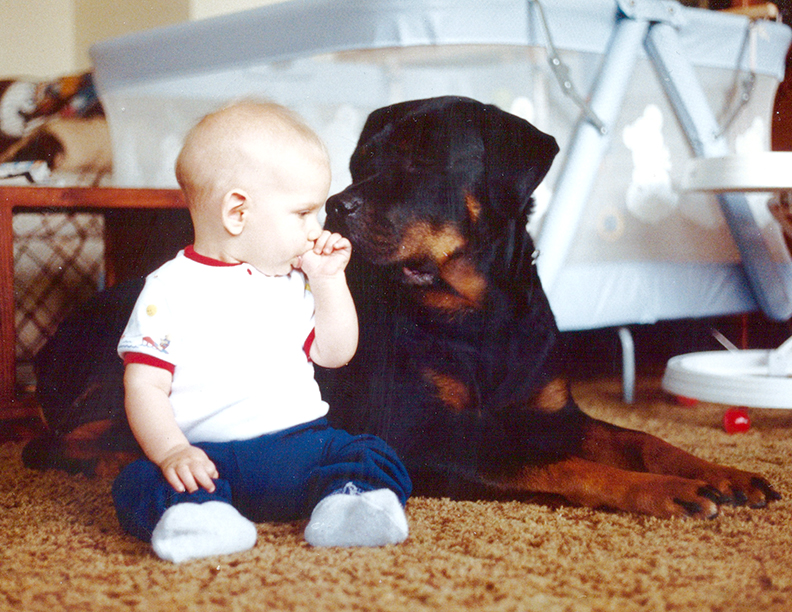
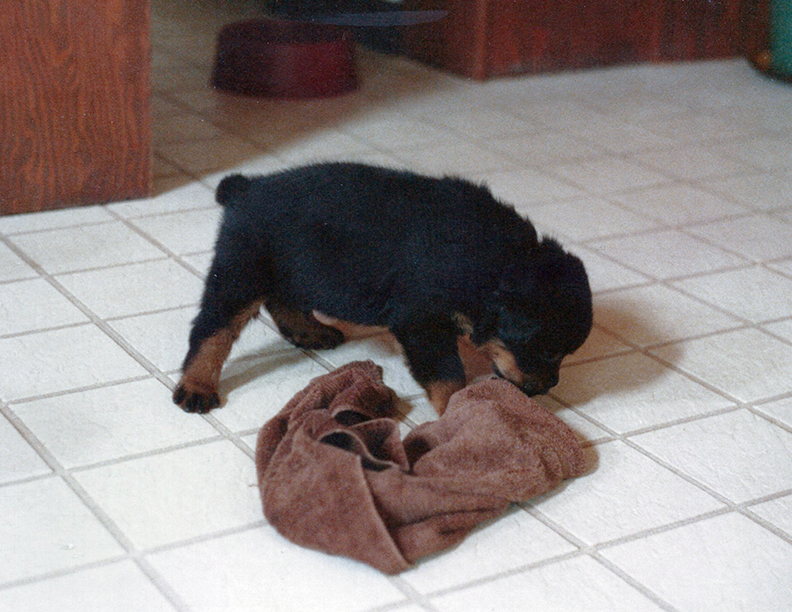
The litter was born in July. Every week on Sunday I would hang out with the breeder and the puppies. I played with them and began to chronicle the life of Chase through photographs. On the Lee Valley Road farm he had room to grow. We started doing a weekly visit to the Badger Kennel Club, doggie school. Just sit on the sidelines for puppy socialization.
Steven and I bought a new Ford Ranger with a topper. We added slider windows in the cab and topper and placed a boot to seal the passage. Once Chase reached the right height, he immediately learned to jump and scramble through. Chase went everywhere with me. When he was the proper age, we registered for obedience classes with Jo-El Kennel Club to receive the best instruction from Drew and Betsy.
Within a year we traveled to Wisconsin, Illinois and Michigan to compete in obedience trials to earn his Companion Dog (CD) certificate. Once accomplished, onward to Companion Dog eXcellent (CDX) which included jumps.
Life changes happened: our address moved, my relationships changed. But Chase was the constant.
When I was pregnant with Philip, family and friends said to get rid of my dog because he’d eat the baby. Chase was mine to keep. Anyone who spent time with us would be convinced that his training was complete. Philip’s first word was “Dog.”
Philip, Chase, and I went everywhere. We’d travel to dog shows. Sometime camping. Chase started working on his Utility Dog (UD) certificate. Then we added the activity he really loved.
The series of family moves [Silverton-Galt-Silverton] was a 3 step process of removing livestock and pets from life. By Corvallis, all gone. By Madison just a wish. About a month fresh to Wisconsin, our family house-camped in a temporary rental. I asked for a dog. I even picked Doberman because my mom favored Magnum PI. No dog. Then, Boxleitner in TV movie Bare Essence = Chase. The name was four years older than the dog. Three houses later, dog was my purview to make happen. Then, I witnessed/assisted in the surgery to crop a Doberman’s ears. Even as farm raised, I was horrified. No cropped ear breeds allowed at my hearth.
I fell in love with the cover of the Rottweiler breed book on the wire rack at the vet clinic where I worked. The much better version of the same thing. Beefier. Working dog. Same coat. As soon as able, I would have my own puppy.
Through a connection at church I found a breeder. Steven and I made a deposit. There was a false pregnancy and big disappointment. Then there was a litter, and I picked out my puppy. A brand new collar and leash. Red. His color for all equipment and accessories.
Key Moments Through the Years
Lee Valley Rd. When the horse fence was being installed, a very young Chase stole the leather glove from the workman.
Loved the boot in the Ford Ranger, learned to jump and scramble through… and even as a full size Rotty could still wiggle through.
Brought Chase with me when I went for the interview to move in with Rick.
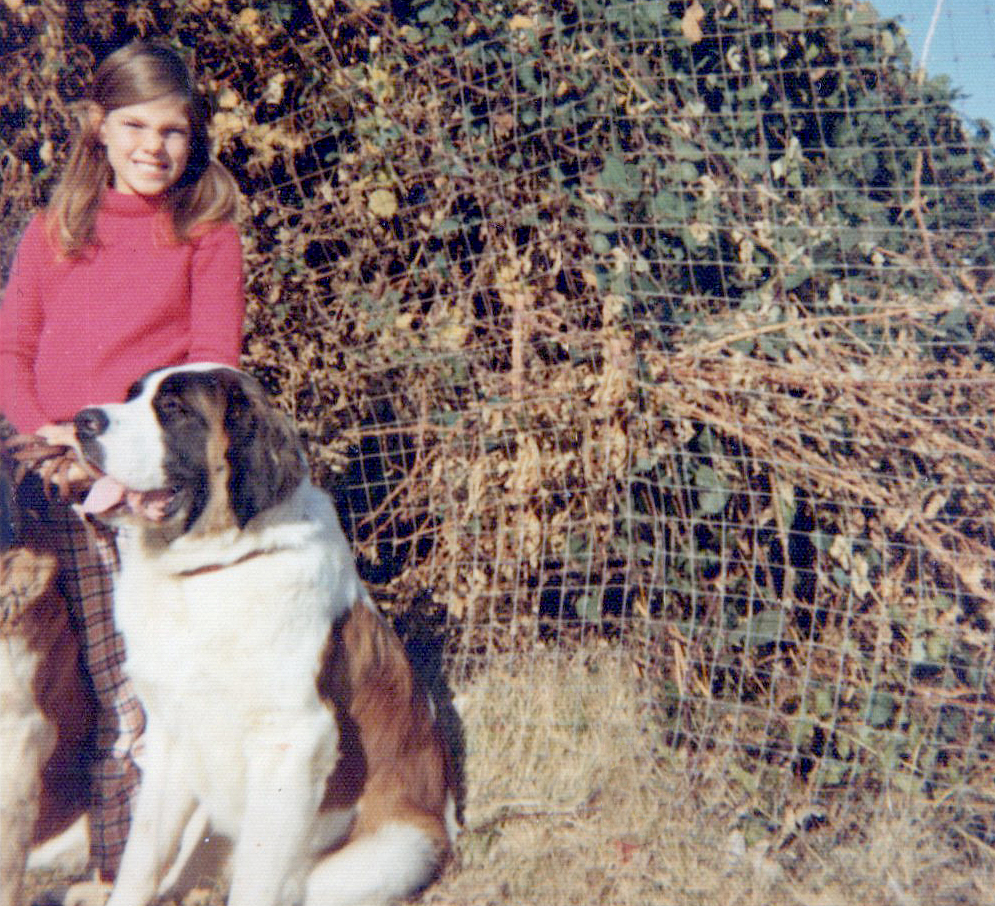
I’ve only had big dogs. St. Bernard’s as a kid and Rottweilers as an adult. Molly was a female splash Saint. Argo was a female mantle Saint. My brother, Bill, had a Blue Tick Heeler named JohnDog for a few months. Chase, male Rotty, was my first baby boy. Obedience, agility, carting, sledding, weight pulling. Tyler, female Rotty, was from a litter sired by Chase. I raised her for about a year and found her a good home. Shortly after Chase died at nine, I started fresh with a male puppy Rotty named August. Due to life, he needed to be rehomed at about two years old.
On a trip to Iowa to visit Sharon: a tall metal slide at the park. I had trained Chase to climb the vertical ladder and run down the slide. I have a photo of him at the top, he waiting for my command to come down.
So starting at the dream side of the equation. You know, just the fun fantasy place to venture. Flushing out. Mind to wander. Say it in my mind; say it out loud if I get the chance.
What I know…
I don’t want to adopt Mister, Philip’s abandoned Pitbull in Blue Mounds.
Short hair.
Breeder, not adopted.
A chunky dog, sturdy built, huggable. Fast. Trainable.
Black and tan, a bonus, but not a requirement.
Train for agility again.
Might be fun to build my own agility equipment again.
Bernese Mountain Dogs are cool. Oh, wait, those are big.
Gratitude has started to normalize for Escape. To prevent a loss, every financial pinch should be put up against how I feel about Escape or the thrill of how it all started. When I feel the pain of compromising or suffering from finance readjustment, think about Escape.
How do you keep the music playing? How do you make it last? How do you keep the song from fading too fast? … I know the way I feel for you is now or never The more I love, the more that I’m afraid That in your eyes I may not see forever, forever
If we can be the best of lovers Yet be the best of friends If we can try with every day to make it better as it grows With any luck than I suppose The music never ends
[James Ingram and Patti Austin, “How Do You Keep the Music Playing”]
The worry I am having about traffic accidents: what is that? I don’t think focusing on something positive is exactly right. Even though Tim said, “…the way to get rid of that thought is to put your focus on some other topic or thought. If you put your energy into that thought, that’s where your focus goes.” Instead, something about the fear should get incorporated in the replacement thoughts. Use the fear to pay the right amount of attention to not being sloppy or careless. But certainly not to get spiraling into the wrong type of thinking.
Is Escape still my favorite thing? Yes and I want to be a good custodian to maintain the shiny warm gratitude; and the shiny ruby red coat.
Yesterday, I called UW Credit Union and applied for a personal loan to consolidate my two credit cards (PayPal MC and BMO Mastercard). I got approved and picked up the cashier’s check.
The Numbers
Combined card debt: ~$8,494
Loan: $8,000 at 13.2% APR, 48 months
New payment: $220.55/month (down from $328/month across both cards)
BMO will have ~$494 left after the payoff, which I’ll knock out over a couple months
The Big Picture
The PayPal card was sitting at a 30.24% interest rate—on a 17-year payoff trajectory at minimum payments. This consolidation gets everything done in 4 years at 13.2%. By making this move, I’ll pay roughly $2,600 in interest instead of $15,200—saving over $12,600.
Once the check is deposited and both cards are paid off / paid down, it’s one payment, one loan, done in 4 years.
Humor and Fear
While chatting in my Claude project for my BCT, discussing the new loan, Claude recalculated the savings related interest. So Claude basically volunteered to check Claude’s math. Savings, good thing.
Why am I still anxious and discouraged? Where is the flaw in my thinking that keeps this from being a positive act? My idea. The me that impulsively made the UWCU call must have thought it was a good idea.
Maybe I need an easier question: are Cheetos Puffs good for breakfast?
Woke up depressed. Everything seems enormous. Figuring out just three hours, feels stuck. Unmovable. So many possibilities, yet stuck. Stumbling on a series of sad songs certainly doesn’t help.
Homework: “Work on seeing the good. How do we keep track of this, for starters?”
Keeping list of gratitudes with date and description
Located in BCT
Seeing the good defined vs gratitude // point of view vs. warm feeling of grateful
Paul saber critique – great disappointment receiving
very critical, too long for me; matter of being glad he was available to give feedback?
enforced cheerfulness (positive thinking)
When all carabiners are in the jar, do I empty the jar and start over?
Goals vs. Dreams
The idea: knowing the difference
How to pick one’s dreams and then making appropriate goals (Or do they pick you?)
Princeton Club West General Manager wrote, “Unfortunately the state has decided that they will no longer give a variance for us to operate the pool with resistance without lifeguards. Moving forward, the pool will still maintain the warmer temperature and will still be used for water walking and exercise, but without the current. We were disappointed also.”
Lack of the resistance pool is a situation most people will think is small, but is a big deal for me. A major life choice and goal was built on this specific access. Communicating the loss seems to only reach a factual level to others and never recognition of a deep grief. Shifting to a secondary plan means greater expense, more miles, more time, more gas.
In the lap pool, the mantra started as a lap count: “working on one.” After a while, “workin on it” became personal shorthand for acknowledging something difficult without spiraling into self-judgment. Not “I’m fine” and not a full explanation. Just workin on it.
The resistance pool had a stance too: I’m coming through. This is my space. I’m not going around you — you go around me. Push against the current. Tim said that stance is exactly what needs to be named in order to be confident in other parts of life. “Confidence is attractive. But you can act confident without being confident — and that still works.”
Revise plan, go all out to embrace the lazy river instead?
Princeton Club New Berlin has a resistance pool that is more like a water park lazy river. 80 laps equals 1 mile and apparently recently on a slow day the trip took a minute and a half to do a lap.
Part 2
I acted on the announcement from Two Men and a Junk Truck / Habitat for Humanity. They called it a community cookout—drop off reusable items, keep them out of the landfill, free food, community fun.
Hence, a Saturday morning full apartment search and declutter. First things found: three petrified Twinkies. A stale bag of milk chocolate Lindor truffles.
The Holstein cow stress toy had an ugly face. Didn’t want to keep it. Didn’t want to give it to Tim for his office either. Gave it a little toss—it landed on the outstretched flap of the donation box. One easy kick and the cow slid inside. Done.
Bottom kitchen cupboard: sweet potatoes with roots growing eight inches. Potatoes nearly shriveled. One yellow onion melted into muck. Philip was in charge of putting groceries away. Never thought to look in that cupboard. Cleaning it up, back on fire.
I added a carabiner into the large box of miscellaneous junk—to wish the donations well. That all find happy homes. Maybe some of it isn’t junk. At least that’s the prayer the carabiner carried out the door.
I showed up expecting a crowd. Only employees were there. The Escape’s hatch got its first real use schlepping the bag and boxes. At least I didn’t have to unload.
Interesting that one huge bag of clothing and two boxes of kitchen and household doesn’t seem to make a dent in potential clutter. Extra drawers opened up in the large dresser. The idea of decluttering doesn’t equal the work it takes or the result it produces.
Creative work lives in two places: dreams of what could be made and goals of what to actually do next. Right now both piles are full and neither is happy.
I signed up for Write a Story in a Day—August 28, in person, with Susanna Daniel. Three hours, $75. She taught one of the FLWW workshops—the kind where you write on the spot and she points at a specific line and tells you exactly why it works or doesn’t. That’s the part worth attending.
The Madison Writers Studio has other opportunities. The Co-writing Collective—Zoom, twice a week, September through November, $150—still deciding. Beyond that, the prices get serious: $575 and $2,495.
I’m not actively doing anything with my graphic design. Design waiting for attention. Not even spending time relaxing with any coloring books. Too many unfinished projects, too many ideas that haven’t started. My online store at Cafepress has designs waiting for updates, new work that was never uploaded, and no marketing pointing anyone there.
Not completely true. The bunny makeover is getting attention. But the feeling is more like brain expansion. Simplify the design. All closed shapes. Doing a lot of merge or minus front. No shared lines. Everything own layer. Oops, simplify the design. Export each layer as .svg file. Import to Tinkercad. Now the brain explodes. Pieces need a height and I don’t know what I’m doing. I know the logical cascade, not the values. I’ve got them going higher and higher and don’t know how to make a recess.
Part 4
Understanding goals and dreams as a decision—not a category, not a todo from a life coach. A decision about what to actually pursue and what to let be an inspiration without a deadline, and when to make things happen.
Examine. Apostle Islands kayaking might be vague on inspection. Not sure what would be fun, managing big water, is it just a concept. The dog is not vague. May be black and tan (not white), smooth coat, stocky, small enough to manage, big enough to hug, train for agility. No hesitation. The difference: an idea that may be borrowed looking at the map and photos versus what real dreams feels like.
Physical fitness goals are still unmeasured right now. Invisible push for competence—but competent enough for… what? Need to set numbers next to each possible goal: Ideal body weight. Squat test, bench press. The pool was one answer. No variance from State just removed my favorite activity.
Recently three people said they liked the purple hair. Internal self-critic said: ridiculous at 62. Colin mentioned my Keen hiking boots were hard to kick in—neutral information, meant nothing—and the self-critic converted it to a verdict as soon as he finished the sentence.
A newsletter from Nir Eyal, How to Find the Hidden Beliefs Holding You Back, this week asked: what belief are you carrying that you never chose? Where did the self-critic’s script come from? Was it ever actually chosen?
I have a longer list of my examples. I’d like a philosophical conversation with Tim about goals, dreams, beliefs. Does Tim think about goals and dreams this way too?
Two Men and a Junk Truck / Habitat for Humanity donation event. The event calls itself a cookout—drop off reusable items, keep them out of the landfill. Free food, giveaways, community fun.
A few hours declutter at the apartment. I’ve got empty boxes and garbage bags. Found more than clutter:
Three Petrified Twinkies
A stale bag of milk chocolate Lindor truffles.
Started the search and sort in the bedroom. Cotton comforter, body pillow, two 24×24 pillows (linens); was tempted to send it all. About to send the body pillow and comforter into the donation pile. When: what if I go car camping and want a little nest in the back of the Escape? Packed it back up in the apartment storage containers. Keeping.
Old maps for Chicago, Portland, California, Wisconsin bicycle paths way, way old. Event is about landfill-avoidance. Maybe someone historical would want them. Threw them in the donation box.
Clothes too big: 44-inch jeans, 3XL polos and T-shirts gone. A few right-size items I just don’t want anymore gone. Three cat toys that didn’t entice play, gone. Such as the little plastic gun that shoots miniature puffballs: Max didn’t care.
Camera bag: haven’t used in more than two years, nicely made, just sitting. Donation.
Keeping the lacrosse ball Kevin gave me for massaging knots out of my back and shoulders. Old meds and supplements can’t go in the donation box but I want them gone. Why isn’t it easy to make them gone? Goodbye, art pen whose instructions are entirely in Chinese, brand new, never used. Donation.
Sheesh! Sheesh! Sheesh! What’s up with the boxes and boxes of alcohol pads? Needed them when pricking my finger for diabetes sugar testing. Stopped doing the finger-prick test. Where do I even throw those out?
Keeping the laminated map of Wisconsin. Corded headphones with a jack gotta go. Don’t have anything that takes a jack anymore. Adapter? No, wireless is what I’d want.
The 18-inch pencil that’s width-proportionate to its length, eraser isn’t even like a real eraser. Blue. Cool at the time. Time to let it go. Mini table lamp knick-knack, new in box reminds me of the little Pixar lamp that pounds the Letter-I down until it becomes the I. This one might be teal. Works, but I’ve never taken it out of the box. Kind of want it. But do I love it?
Little tiny rubber finger puppet monster: given to me around 2000. A woman in HR asked for an extra graphics project she wanted a vector, but a photograph with the background removed worked perfectly. Gave me my own little rubber monster finger puppet. Do I still keep this? I never play with it. Not cute enough to display. I think I still have a picture of it somewhere. Too tired to get the camera out, would have to clean cat hair off first. Maybe the memory is enough.
Tracy and I drove to MediaWest one year, maybe 2004. Pam said: ‘Let’s get you an Illinois Tollway I-Pass.’ Guess what I just found. Do I care? See if there’s money left? Long time ago. This just goes in the garbage, doesn’t it? Decide another day.
Ugg! Another box of Curad alcohol prep pads 100 medium prep pads. Could probably line a wall with them.
Donating the Omega Zip drive, circa 2012. Had two back then and sold one to Brian for $5. Why couldn’t he have bought both?
Oh my god no-brainer: anything with Velcro that I do not need. Even if I kind of need it, out of here. Velcro sucks.
Fisheye lens add-on for the iPhone back when there was only one camera. Won’t fit mine. Bye.
Now that I have the Escape: little adapter that turns a cigarette lighter into a USB-B. Brand new. Keeping.
Tiny prism, original packaging. Belonged to my brother. Label says Tokyo, Japan. Would the sun ever hit it? Could you hang it in front of a window? Keepsake. Deal with it later. When I received a few of my dad’s things after he passed, one was a knife. Maybe 8 inches, wood handle, comfortable in the fist, then the blade. Finland. If you look just right you can see scrolling letters. No idea what they say. Little notch like a pocket knife but doesn’t fold. Found in the back of a drawer in the art chest. Should put it out and use it occasionally. Perfect little knife, just the right size.
Art chest: not finding anything to get rid of. Pens, pencils, erasers, a different kind of eraser, markers keeping all art supplies. Tape drawer alone: scotch, blue, electrical, double-sided, probably something else too. A drawer of paper none of it printer paper: graph, colored. Notebooks. Envelopes in the next drawer. Could send a thousand envelopes; haven’t sent one in forever.
Keeping all stencils, protractors, rulers, more stencils. Done with the art chest.
Bear wall: antique wood boxes stacked like a puzzle. Mostly teddy bears, knickknacks, little wood boxes, books. Lower shelves have art supplies. Can’t find more to get rid of. Checked bottom drawers nothing. Three This End Up bookcases: jumble of books/stuff/knickknacks jammed in every way. Keeping the miniature Stormtrooper, bought him because I wanted him. Expensive. Thought he’d be a posture statue on the counter for figure drawing. New in box. Keeping Grogu. Almost life-size. Body soft, head hard plasticky rubber you wouldn’t want to snuggle with it. Cute. Interesting how many people on video calls comment about Grogu in the background, even though he’s just tossed in a corner on a shelf. Poor guy.
Technology: two file cabinets with no filing nothing to donate. Baggie of thumb drives, haven’t used in years, better to just buy a new one. Sony recorder battery ancient, no power. Rechargeable via a pop-out USB-B; Apple only takes USB-C. iPhone Voice Memo working fine, so not experimenting and risking losing a recording. One box of cords, neatly bundled, surely don’t need all of them; evaluate another day.
Jewelry box: nothing sticks out. Moving on. Bathroom: all drawers checked, nothing donatable. Just more alcohol pads. And you know what? Nobody in healthcare realized I never used them. Maybe day one or two. After that: oh hell no. Who needs that step? People freaked out when they found out that I skipped the alcohol wrap. Nothing happened. Grew up on a farm didn’t have thousands of alcohol pads. Tattooing goats, we’d swab the ear (between the veins, careful not to pinch) more about removing oils so tattoo held, not health. I was a kid back then.
Prick my finger for a diabetes sugar test, want no extra step, no extra garbage from alcohol pad wrappers. (Thankful the diabetes is under control and the daily testing has been paused long ago).
Kitchen: emotionally and physically painful. Bottom cupboard sweet potatoes with roots growing 8 inches upward. Shriveled potatoes. Three yellow onions. Why did one onion turn to complete mush? Everything moved to the garbage bag; spray cleaner, paper towels, mopping. Philip was in charge of putting groceries away. I never thought to look in that bottom cupboard after he left. My back muscles are on fire during cleaning it up. So now we know where the flies are coming from. Next: a drawer filled with plastic bags Philip stockpiled from the grocery store, way more than needed. Stuffed in so tightly it took forever to dig them out. Doubt he was saving them for recycling. Maybe. I don’t know. Some tall glasses too heavy and thick. Gone. Opened the dishwasher pew, that stunk. Grabbed a few things. More to sort another day. Final count going to donation: overflowing bag of clothes; a box of the most unusual mix of everything, mostly tiny things; one teddy bear brand new that doesn’t match the collection, faring him well; a smaller box with a few kitchen items. Still need to carry down the garbage bag in order to get the fly food out of the apartment. Probably two more trips for the boxes. So tired. Another-day list: place settings, utensils, maybe cookware that never gets used. 33-gallon bag of clothes needs to get down to the Escape. Donation box only half full maybe find a slightly smaller box. This one is from Metabolic Meals, super heavy cardboard. Got the bag of clothes down. Back hurting. Shoes tied, shorts on. Maybe switch to a clean shirt, wash my face. Further tweaked my back leaning over the sink.
Threw a carabiner in the box to wish it well, that it finds happy homes for all this junk. Maybe some of it isn’t junk. Maybe it’s exactly what somebody wants. At least that’s the prayer I’m sending the carabiner to convey.
Last question: do I eat before I go, or check whether they’re really serving food at the cookout? Kind of know where to go, drive further past the Dane County Humane Society. Two Men and a Truck depot.
One sure way to get over a crush is to embrace someone new and let yourself be drawn into their life. From the outside, his looks perfect — family, following his dream, asking for support and giving back work made from the heart. Personable and humble. And cute.
Jared Halley is an a cappella artist. He builds an entire song by himself — every vocal part, even the percussion, recorded separately and assembled into a split screen of as many as fifteen squares, walking into frame for each part when it’s that square’s turn to sing, sound, or dance. I’ve watched for months. I follow him, click like on nearly everything.
When I was deciding whether I could afford the Escape, I canceled my monthly gifts to two artists on Patreon. Jared was one of them. Not a high dollar amount — but giving gifts while I’m struggling felt like a luxury I couldn’t justify. Then I thought through it, and I wasn’t comfortable having stopped. So I re-upped. I started watching old recordings of his live events, the ones where he just talks to people. Which led me to his newest original, “Rescue Me.”
I wrote about what it meant to me, and I posted it — publicly, on his page. Everyone else will hear “Rescue Me” as a love song to a person. I swap the “you” for a place. Rescue is the town in California where I grew up. Before the first verse ends, I’m nine years old again in El Dorado County, drowning in a loneliness that was true then and is true now — and the thing I’m reaching for was never a person. It was the foothills, the oak trees, the horses, the clean straw late at night. I used to say “Rescue, rescue me” to myself as a kid, because I wanted the name of the town to have power.
Two days later, he wrote back. Not a generic thank-you — a real reply. He had read it. He quoted my own line back to me, “a ghost made of foothills,” and said that once a song is released it stops belonging only to the writer; it becomes something a listener can pour their own story into. He said a song becoming a vessel for someone’s memories like that was the kind of gift he most hopes his music can be.
I cried the hardest I have in months.
Not because I asked. Not because anyone is paid or obligated to. A person I respect read my words, was moved, and told me so. I have been wanting that since I was seven, carrying a drawing to my mother — the overlapping shapes, the little hole you could see the next shape through — and watching her enthusiasm thin by the third one. The armor I wear held all day. This is what finally broke it. I let it.
There’s a smaller thing I can’t stop noticing. After I quoted his lyrics, a few lines of my own came out without my meaning them to — “Standing on top of sadness, being loud and grumpy, the only way to keep myself from drowning” — and they fell right into his meter. His song opens “drowning in lonely.” My ear caught the rhythm and my words followed it home.
I listen to that song maybe ten times a day. Some things you support because you love them. Some things you say out loud because, for once, somebody heard you.
Colin has been instructing me in the Plum Blossom saber form; received next move. Sunday Push, someone brought up who was going and where to see Colin and his band. Moonbutter plays Make Music Madison on the 21st. Colin plays drums and calls it a dad’s band, except there are no other dads. There’s a mom. (Janet sent me the link: Rock, Blues, Alternative. Jam band style. Cover group playing 60s, 70s, and 80s rock with an emphasis on fun.) I’ve never been to Lerdahl Park.
While Colin and I were pushing. I asked what he plays. Drums. “Oh, you’re a drummer.” I feigned excitement like a groupie fawning over a drummer. Not sure he got that I was breaking push form, being silly, but he put up with me. Then I asked, “So what kind of drummer are you?” He looked at me. “What do you mean, what kind?” I didn’t have the music words, so I did a mime, air drumming, instead. A big, dramatic Phil Collins thing. He goes, “Oh, you mean the fills.” Fills. Oh cool, he knew I was talking about the artist Phil Collins. He guessed the technique. Then it hit me: I’m standing here talking to Colin about Phil Collins and fills. Suddenly we realized there were multiple puns. The whole thing collapsed into ridiculous. To me at least. Colin smiled and agreed it was silly.
Days later, alone in my apartment, I’m still laughing out loud. Smiling. Just laughing because it was funny and I was there. However depressed I was Friday morning, I feel a little better. A laugh that lasts days is worth noting.